
October 19 2026 at 10:00AM
Preserving the Past, Building the Future: Lessons from the Canton Palace Theatre
 |
 |
 |
A historic landmark, a transformational capital project, and a community working together to prepare the Canton Palace Theatre for its next 100 years.
There is something special about learning the story of a historic building while sitting inside it.
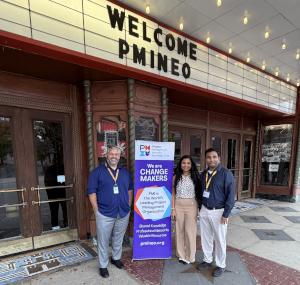
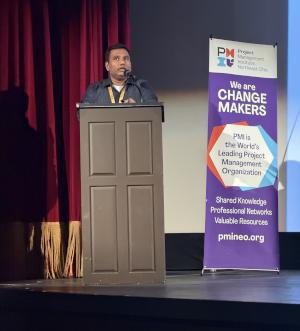
During our recent educational event at the Canton Palace Theatre, we had the opportunity to hear from Georgia Paxos, Executive Director of the Canton Palace Theatre, about the Palace’s history, its role in the community, and the transformational project underway as this landmark approaches its 100th anniversary.
For project professionals, the evening was much more than a behind-the-scenes look at a historic theatre. It offered a real-world case study in project leadership, stakeholder engagement, accessibility, historic preservation, fundraising, technology modernization, and community partnership.
Preserving History While Planning for the Future
The Canton Palace Theatre has been part of the community for nearly a century, but its future was not always certain. At one point, the building came within weeks of demolition before local business and community leaders came together to save it.
Today, the Palace hosts approximately 200 to 225 public and private events each year and welcomes more than 80,000 attendees annually.
As the Palace approaches its centennial, preservation is only part of the challenge. A facility designed in the 1920s must now support modern expectations for accessibility, technology, concessions, security, production capabilities, artist accommodations, and the overall guest experience.
Because the Palace is listed on the National Register of Historic Places, protecting its historic character remains central to the project. Rather than replacing what makes the building special, the expansion is being thoughtfully designed around it.
Plans include additional lobby space, concessions and restrooms, an outdoor event area, improved dressing rooms and backstage facilities, a loading dock, administrative space, expanded production capabilities, and additional seating opportunities. The stage will also be expanded to accommodate larger productions.
The lesson is an important one: modernization does not have to mean losing the past.
Accessibility and User Experience
Accessibility was one of the strongest themes of the presentation.
Historic buildings present unique challenges because they were constructed long before today's accessibility standards. Planned improvements at the Palace include an elevator providing access to the balcony, additional accessible seating, improved access to public areas, and accessibility enhancements for the stage and backstage spaces.
Accessibility is not only about the audience. Performers, employees, and other professionals with mobility needs should also be able to access the spaces they need.
The project also considers the broader guest experience. When a large audience arrives, visitors may be entering the theatre, purchasing concessions, using restrooms, and finding their seats at the same time. Additional lobby space, concessions, restrooms, and gathering areas will help address those pressure points.
Behind the scenes, improvements to dressing rooms, hospitality areas, loading facilities, production spaces, and technology will improve the experience for artists, promoters, and renters as well.
For project teams, this is a useful reminder that success is not measured only by what we build. It is also measured by how people experience what we build.
Modernizing a 100-Year-Old Theatre
Technology presents another interesting challenge.
Today's events may require reliable connectivity, digital point-of-sale systems, video and streaming capabilities, production technology, and enhanced security. None of these requirements existed when the Palace was originally designed.
Expansion provides an opportunity to integrate these capabilities more effectively throughout the facility. Technology, in this case, is not simply an IT upgrade. It supports the Palace's ability to host different types of events, better serve guests and renters, and remain competitive as an entertainment venue.
Listening to Stakeholders
One of the most practical project management lessons came from how the Palace developed its requirements.
When neighboring property became available, the organization reached out to promoters, renters, and other partners and asked what improvements would make them more likely to bring additional events and performances to the Palace. Their feedback helped shape the project.
The principle is simple but powerful: listen to the people who use the facility before designing the solution.
Stakeholder engagement creates the greatest value when it happens early enough to influence project decisions.
Managing a $19 Million Vision
Like many major capital projects, the Palace project evolved as planning progressed. Different levels of investment were explored, and as designs developed and construction costs changed, the team went through multiple rounds of budgeting and value engineering. The project ultimately developed into approximately $19 million investment.
An important lesson from that process was knowing what could and could not be compromised. The team identified project elements expected to create future operational value and protected those priorities during value engineering.
Value engineering should not simply mean cutting costs. It should control costs while preserving the capabilities that make the project valuable.
The Palace also completed an independent market study to test assumptions and strengthen its business case, providing additional validation for stakeholders and funding partners.
Building Trust and Community Support
A transformational project cannot happen without strong partnerships.
The Palace has worked with foundations, state partners, businesses, financial institutions, board members, individual donors, and community supporters. Georgia also discussed the importance of demonstrating how previous investments helped the organization grow. That track record gives stakeholders greater confidence when considering future support.
The takeaway extends beyond fundraising: trust is built long before you need to ask for it.
Transparency is equally important. Large projects encounter changing costs, difficult decisions, communication challenges, and unexpected circumstances. Being open about those realities can strengthen stakeholder relationships.
The project's impact also extends beyond the theatre. Visitors may eat at local restaurants, shop downtown, stay at nearby hotels, and support other businesses. Approximately 40 percent of Palace attendees come from outside Stark County, according to the presentation, reinforcing its role as a regional destination.
Key Takeaways for Project Professionals
The Palace journey offered several lessons applicable across industries:
- Start with purpose and understand why the project matters.
- Engage stakeholders early and listen to the people who will use the outcome.
- Design for accessibility as a core requirement.
- Validate assumptions with independent data and perspectives.
- Know what is non-negotiable and protect long-term value.
- Build relationships before you need support.
- Communicate transparently, especially when circumstances change.
- Think beyond project completion and focus on the value the project will continue to create.
Supporting the Next 100 Years
One of the simplest requests shared during the evening was also one of the most important: to help spread the word.
Supporting the Canton Palace Theatre's future does not only mean making a financial contribution. Sharing the project with friends, family, coworkers, businesses, community members, and supporters of the arts can help build awareness and momentum.
To learn more about the Canton Palace Theatre 100th Anniversary Project, review project information, or make a pledge, visit CantonPalace100.com.
A sincere thank you to Georgia Paxos and the entire Canton Palace Theatre team for welcoming us, sharing both the successes and challenges of their journey, answering our questions, and allowing us to experience a transformational project inside the very building it is designed to preserve.
The Canton Palace Theatre has nearly 100 years of stories behind it. The work underway today is helping ensure there will be many more ahead.
Preserving the past. Improving access. Strengthening the community. Building for the next 100 years.